A destination wedding is more than a simple ceremony; it is an immersive, multi-day experience that brings loved ones together in an extraordinary location. Whether you envision a sun-drenched beach in Cabo, a historic villa overlooking Lake Como, or a rustic mountain chalet in Aspen, getting married away from home adds a unique layer of romance and adventure. However, transporting a celebration across state lines or international borders requires an entirely different set of logistical rules compared to a hometown wedding.
Without proper foresight, the dream of a getaway celebration can quickly become overwhelmed by legal complexities, fluctuating currencies, and communication barriers. Professional wedding planners who specialize in destination logistics understand that success hinges on meticulous timing, cultural awareness, and robust vendor management. By approaching the planning process strategically, couples can ensure a seamless experience for both themselves and their traveling guests.
Timelines and Advanced Scouting Trips
Time is your most valuable asset when orchestrating an event from afar. Destination celebrations require significantly longer lead times than traditional weddings to ensure maximum guest attendance and vendor availability.
-
The Travel Window: Send out your save-the-date notifications anywhere from nine to twelve months before the wedding day. This extensive notice gives your guests ample time to request time off from work, monitor flight prices, update passports, and arrange for childcare or pet sitting.
-
The Initial Site Visit: If your budget allows, plan an initial scouting trip approximately eight to ten months prior to the date. During this trip, focus entirely on touring potential venues, assessing the physical proximity of guest accommodations to the ceremony site, and tasting menus from local caterers.
-
The Final Walkthrough: Schedule a second visit roughly two to three months before the wedding. Use this trip to conduct hair and makeup trials with local artists, finalize the floral design based on seasonal availability, and map out the exact spatial layout with your on-site coordinator.
Navigating the Legalities of Far-Away Nuptials
One of the most common pitfalls of a destination wedding is assuming that marriage laws are universal. Every country, and even individual states or regions, enforces distinct requirements for legal marriage certification.
Legal vs. Symbolic Ceremonies
Many countries, such as Mexico, France, and Italy, require extensive bureaucratic paperwork, blood tests, civil ceremonies in local city halls, and official document translations to make a marriage legally binding for foreign nationals. To avoid this stress, a large percentage of destination couples choose to quietly execute their legal paperwork at a local courthouse in their hometown before leaving. They then host a beautiful, deeply personal symbolic ceremony at their destination, freeing themselves from international legal red tapes.
Essential Document Preparation
If you choose to pursue a legally binding marriage abroad, start gathering documents at least six months in advance. You will typically need certified copies of your birth certificates, valid passports, witness affidavits, and, if applicable, absolute divorce decrees. Many international destinations require these documents to be authenticated with an Apostille stamp, a specialized form of international certification issued by your home government.
Assembling and Managing Your Vendor Team
Securing a reliable creative team is the backbone of any destination wedding. Couples often face a critical choice: should they hire local vendors native to the destination, or fly in trusted professionals from their home country?
The Hybrid Vendor Strategy
Expert planners frequently recommend a hybrid approach to maximize efficiency and styling cohesion. For highly personalized components where communication and artistic trust are paramount, such as photography, videography, and bridal styling, consider flying in professionals from your home country. You will be responsible for covering their travel expenses, flights, and accommodations, but the peace of mind and stylistic alignment are often worth the investment.
For logistically heavy, location-dependent components like catering, heavy equipment rentals, stage construction, and floral installations, always hire established local vendors. Local professionals possess deep connections with regional authorities, understand the specific climate conditions of the area, and can navigate local supply chains without costly import fees or shipping delays.
Curating the Ultimate Guest Experience
When guests invest significant financial resources and travel time to attend your wedding, your responsibilities as hosts expand beyond the wedding day itself. Providing a thoughtful, well-curated itinerary turns a brief trip into an unforgettable vacation for your circle.
Comprehensive Information Hubs
Your wedding website should act as a comprehensive travel agency for your guests. Break down the information into hyper-specific, digestible categories.
-
Airport Logistics: Detail the primary international airport guests should fly into, the optimal ground transportation methods to the hotel, and estimated taxi or shuttle costs.
-
Group Accommodation Blocks: Secure discounted room blocks at two or three different price points to accommodate varying budgets, ensuring all properties are within a fifteen-minute radius of the main event venue.
-
Packing Guides: Provide explicit instructions regarding regional dress codes, expected weather patterns, and specific footwear needs, such as提醒 guests to avoid thin heels if walking on cobblestones or soft sand.
Multi-Day Event Itineraries
Maximize the destination experience by organizing low-stress group activities surrounding the main event. Kick off the weekend with an informal welcome cocktail reception featuring local cuisine and music to allow guests to break the ice.
The day after the wedding, consider hosting a relaxed farewell brunch or arranging a group excursion, such as a guided boat tour, a winery tasting, or a historic walking tour. Ensure that you also leave dedicated blocks of free time so guests can explore the destination independently without feeling over-scheduled.
High-Quality Visual Inspiration
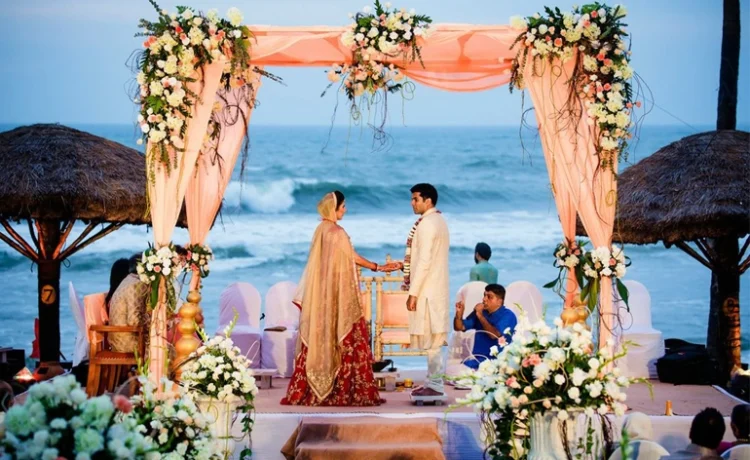
Review the destination celebration design below to see how a professional production merges regional architecture, rich floral draping, and open-air seating to frame a spectacular, exotic marriage environment.
Frequently Asked Questions
How do we handle international currency fluctuations when paying foreign vendors?
Currency volatility can cause your final wedding costs to shift unexpectedly between the time you sign a contract and your final payment deadline. To mitigate this risk, request that vendors bill you in your home currency whenever possible, or look into specialized international wire transfer services that allow you to lock in a guaranteed exchange rate months in advance. It is also wise to maintain a dedicated five to ten percent currency cushion within your master budget to absorb any sudden economic shifts without disrupting your production plans.
What is the most secure way for a bride to transport her wedding gown on an airplane?
Never check your wedding gown or formal bridal attire in a cargo suitcase, as the risk of lost luggage can derail the entire event. Instead, invest in a heavy-duty, breathable garment bag. Contact your airline well in advance to confirm their specific policies, and request permission to use the first-class onboard coat closet when boarding the aircraft. Most flight crews are incredibly accommodating to destination brides and will gladly hang the garment securely to minimize deep fabric wrinkling.
How do local customs and regional labor laws impact the wedding day schedule?
Many international destinations operate on cultural timelines that differ significantly from standard American production schedules. For example, in parts of Europe and Latin America, afternoon heat frequently shifts businesses into midday breaks, meaning setup crews may start later in the evening. Furthermore, local sound ordinances may mandate that outdoor amplified music cease precisely at midnight, forcing you to transition the reception indoors. Always ask your local planner to audit your day-of timeline against regional labor and noise laws.
Should we pay for our wedding guests hotel accommodations and flights?
Traditional etiquette dictating destination events states that guests are responsible for paying for their own personal transportation, flights, and lodging expenses. As the hosts, your financial obligation is to cover the costs of all organized food and beverage events, including the welcome party, the wedding reception, and the farewell brunch, alongside any group transportation provided between the host hotel and the venue.
How do we handle tipping customs for wedding vendors in an unfamiliar country?
Gratuity customs vary wildly across global boundaries. While standard percentages are common practice across North America, tipping can sometimes be viewed differently or is already legally integrated into service contracts as a mandatory service charge in parts of Europe and Asia. Prior to your departure, request a comprehensive regional tipping guide from your local wedding planner or resort coordinator to ensure you distribute gratuities respectfully and in accordance with local cultural standards.
What happens if critical items or decor pieces get stuck in international customs?
To prevent severe shipping delays or confiscation at the border, avoid shipping large boxes of decor, customized signage, or favors internationally via standard postal carriers. Customs agents frequently flags bulk commercial items, imposing steep import duties or holding boxes indefinitely for inspection. Instead, utilize the luggage allowances of your bridal party and immediate family members, packing essential, lightweight decor items directly into checked personal suitcases to ensure they arrive safely with you.