The rhythmic sound of crashing waves, the softness of powdery sand underfoot, and the endless expanse of the ocean horizon create a natural setting that embodies romance. While expansive coastal resorts routinely host massive waterfront weddings, beach environments are uniquely suited for small, intimate ceremonies. Micro-weddings and elopements by the ocean possess an unhurried, deeply personal atmosphere that allows couples to focus entirely on the emotional weight of their vows.
Choosing an intimate beach venue reduces the logistical stress often associated with larger celebrations. Smaller guest counts open up access to secluded coastal hidden gems, such as private coves, rocky cliffsides, and quiet eco-resorts, which cannot physically accommodate massive crowds. Whether you prefer the tropical warmth of the Florida Keys, the rugged charm of the Pacific Northwest coastline, or a Mediterranean-style coastal villa, a scaled-down beach wedding offers a blank canvas for sophisticated design and profound connection.
Architectural and Natural Typologies of Intimate Coastal Venues
When selecting a beach venue for a small guest count, couples are not limited to standard public stretches of sand. The coastline features several distinct geographic and architectural settings that offer varying degrees of privacy, shelter, and visual drama.
Secluded Coves and Hidden Inlets
For couples prioritizing absolute privacy without the interruption of public beachgoers, a natural cove enclosed by rocky bluffs or dense coastal vegetation is an exceptional option. These micro-environments act as natural amphitheaters, offering excellent acoustics for a small gathering while blocking strong coastal winds. The enclosed geography creates a powerful sense of intimacy, making guests feel as though they have stepped into a private sanctuary dedicated exclusively to the couple.
Oceanfront Estate Lawns and Private Villas
A highly sophisticated way to experience a beach wedding is to book a private oceanfront estate or luxury villa. This setup offers the best of both worlds: a manicured green lawn elevated slightly above the beach for the ceremony or reception, with direct gated access to the sand for sunset photos. This layout eliminates the logistical challenge of moving heavy furniture onto the sand while keeping the ocean as the central visual focus. It also provides an immediate, luxury indoor backup space if weather conditions shift.
Weathered Coastal Bluffs and Cliffsides
Not all beach weddings require standing directly on the sand. Elevating the ceremony to a rocky bluff overlooking the ocean introduces a dramatic, architectural quality to the landscape. This typology is especially prominent along the coastlines of California, Oregon, and New England. The perspective from a cliffside offers panoramic views of the water, capturing the raw power of the ocean and the coastline, which frames the altar area beautifully.
Designing and Production Styling for Waterfront Intimacy
The design philosophy for an intimate beach ceremony should focus on organic minimalism. When working with a backdrop as visually commanding as the ocean, the production styling should enhance and frame the natural elements rather than attempt to dominate them.
Color Palettes Born from the Coast
Steer clear of artificial, overly vibrant neon hues. Instead, anchor your design in a sophisticated, tonal color scheme derived directly from your immediate surroundings.
-
The Serene Coastline: Combine soft driftwood gray, creamy ivory, washed linen white, and pale seafoam green. This palette mirrors the sand, foam, and coastal vegetation, creating a peaceful, cohesive visual flow.
-
The Moody Shoreline: For rugged, northern beaches, lean into deeper tones like slate blue, charcoal grey, deep navy, and antiqued brass. These shades complement dark volcanic sands, moody skies, and weathered stone formations.
Earthy Textures and Stable Furniture
Selecting materials that can withstand the coastal elements is both a stylistic and practical necessity. Replace standard plastic or heavy banquet chairs with lightweight wooden seating options, such as bentwood or bamboo folding chairs, which fit naturally into the environment.
Incorporate tactile textiles like raw silk, unbleached linen runners, and woven sea grass rugs to anchor the altar area. When designing the ceremonial arch, opt for open-frame wooden structures or asymmetrical floral pillars that allow the ocean breeze to pass through freely without turning the installation into a sail.
Floral Design with Coastal Resilience
Flowers exposed to direct salt air, intense sun, and coastal wind must be exceptionally resilient. Avoid delicate blooms like hydrangeas, which wilt rapidly when deprived of constant moisture. Instead, select structurally hardy flowers and plants such as king proteas, orchids, calla lilies, and various types of succulents. Supplement the floral arrangements with local coastal foliage, dried palm fronds, or pampas grass to mirror the wild, untamed movement of the sea.
High-Quality Visual Inspiration
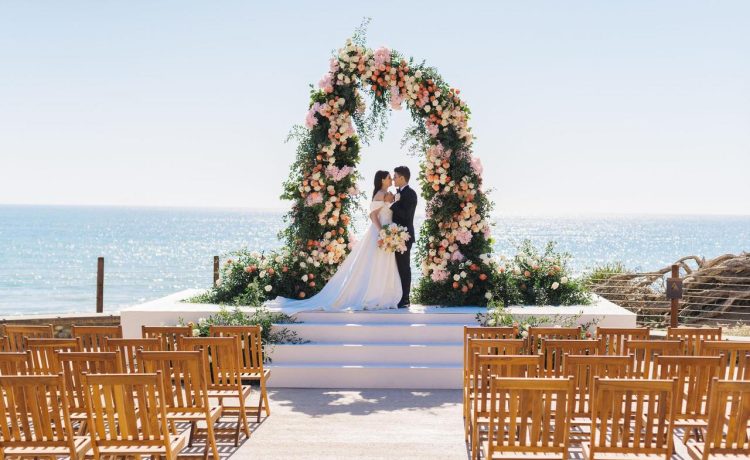
Review the premium coastal ceremony design below to see how a small, well-curated layout utilizes clear paths, warm natural wood, and strategic structural framing to enhance guest interaction and maximize ocean views.
Frequently Asked Questions
Do we need a public permit to host an intimate wedding on a beach?
Permit requirements depend entirely on whether the beach is classified as public, state, or private land. Most public beaches require a special-use permit for any organized gathering, even for small groups under twenty people, to ensure the event does not violate local zoning or conservation laws. If you host the ceremony on a private beach attached to a rented coastal estate or a dedicated oceanfront resort, the permitting is typically covered under the venue rental agreement, eliminating additional municipal paperwork.
How do you ensure guests can hear the vows over the sound of breaking waves?
The ocean generates significant background noise that can easily muffle human voices, even during a small, quiet gathering. For an intimate ceremony, a professional sound system remains essential. Your audio engineer should equip the officiant and the couple with compact wireless lavalier microphones hidden inside their attire. These microphones must be fitted with specialized wind covers to eliminate the ambient rushing sound of coastal gusts, ensuring every guest hears the vows clearly.
What is the ideal time of day to schedule an intimate beach ceremony?
The absolute best time for a beach ceremony is during the golden hour, which occurs approximately one to one and a half hours before the official sunset time. Scheduling your vows during this window avoids the harsh, overhead glare of the midday sun, which causes guests to squint and creates unflattering, dark shadows in professional photographs. The golden hour provides soft, warm lighting and typically coincides with dropping temperatures, making the outdoor environment far more comfortable for everyone present.
How should couples manage the challenge of walking and standing on soft sand?
Walking smoothly on soft sand requires careful footwear planning and structural modifications. Couples should explicitly state on their wedding website or invitations that flat footwear, wedges, or stylish sandals are recommended, while thin stiletto heels should be avoided completely. For the bridal party and the couple, installing a solid wooden or bamboo walkway down the center aisle provides a stable, elegant path to the altar, preventing shoes from sinking into the sand during the processional.
What are the rules regarding serving food and alcohol on a beach?
Public beaches maintain incredibly strict regulations regarding food and beverage consumption, with almost all public coastal parks strictly prohibiting glass containers and open alcohol consumption to protect the environment and wildlife. To serve gourmet food and custom cocktails legally and safely, it is best to host the actual dining portion of the evening on an elevated deck, terrace, or lawn immediately adjacent to the sand, utilizing eco-friendly, high-end reusable dinnerware if any items cross onto the beach proper.
How do tidal shifts affect the planning of a waterfront ceremony?
Tides are a critical variable that can completely alter the physical size of your venue. A wide, spacious beach at low tide can shrink drastically or disappear entirely at high tide, potentially flooding your ceremony site and decor. Planners must consult local tide charts months in advance for the exact wedding date and location. Ensure your setup is positioned well above the high-tide mark, or coordinate the ceremony timeline to align precisely with a receding tide for maximum safety and space.
What is the most effective backup plan for a beach wedding if it rains?
When hosting a beach wedding, a secondary indoor or fully sheltered space must be secured in advance. If you are renting a coastal villa or resort, ensure there is an ocean-view ballroom, a covered pavilion, or a heavy-duty commercial tent option reserved on standby. The decision to execute the backup plan should be made at least three to four hours before the ceremony starts, allowing the design team sufficient time to relocate delicate floral installations, chairs, and sound equipment without panic.