The modern event landscape has shifted dramatically away from passive dining. Standard buffet lines and traditional three-course seated dinners no longer carry the same excitement they once did. Today, hosts want their events to be memorable, and guests crave engagement, personalization, and entertainment. Interactive catering has emerged as the premier solution to this demand, transforming a simple meal into an immersive culinary event.
By bringing the kitchen into the party space, interactive catering bridges the gap between dining and entertainment. Guests get to watch skilled chefs craft dishes in real time, customize flavors to their exact preferences, and participate in the creation of their food. This approach not only accommodates diverse dietary restrictions seamlessly but also serves as a natural icebreaker, sparking conversation among attendees.
The Rise of Action Stations and Live-Cooking
Action stations have evolved far beyond the standard prime rib carving stations of the past. Modern live-cooking stations focus on global flavors, sensory appeal, and chef artistry.
Flaming Wok and Stir-Fry Displays
A live wok station brings heat, movement, and incredible aromas to an event space. Guests select their preferred base, such as jasmine rice, rice noodles, or crisp vegetables, and choose from proteins like marinated flank steak, jumbo shrimp, or organic tofu. Chefs toss the ingredients in blazing woks right before their eyes, finishing the dish with house-made teriyaki, spicy szechuan, or ginger-soy glazes. The auditory sizzle and visual drama of the open flame immediately draw a crowd.
Hand-Rolled Sushi and Sashimi Bars
For an upscale gathering, a live sushi bar offers unmatched elegance and precision. Master sushi chefs set up a pristine station featuring fresh, sushi-grade fish, vibrant vegetables, and seasoned rice. Guests can request custom rolls, traditional nigiri, or hand rolls tailored to their tastes. Watching the knife skills of a trained chef adds a performance art element to the dining experience, ensuring the seafood is served at the absolute peak of freshness.
Artisanal Neapolitan Pizza Ovens
Mobile wood-fired or high-tech stone pizza ovens can now be brought directly to event venues, including outdoor spaces and spacious indoor halls. Guests choose their toppings from a spread of imported meats, artisanal cheeses, and fresh herbs. A pizzaiolo stretches the dough, builds the pie, and slides it into a scorching hot oven. Within ninety seconds, guests receive a bubbling, charred, personalized pizza served fresh on a wooden board.
Immersive Customization Bars
Customization bars allow guests to become the creators of their culinary journey. These setups work exceptionally well because they give individuals complete control over portion sizes and flavor profiles, which inherently resolves issues regarding picky eaters and dietary allergies.
The Ultimate Charcuterie and Grazing Boards
Instead of a pre-arranged platter, a stylized grazing station managed by a knowledgeable charcuterie specialist invites guests to design their ideal plate. The station features a curated selection of artisanal cheeses ranging from soft triple-creams to aged goudas, cured meats, honeycomb, specialty mustards, house-pickled vegetables, and dried fruits. The specialist guides guests through flavor pairings, explaining the origins of the cheeses and slicing cured meats to order.
Street Taco and Guacamole Mashing Stations
A gourmet taco bar is universally appealing, but elevating it with an interactive element makes it unforgettable. Guests choose from high-quality fillings like slow-cooked carnitas, carne asada, or chili-lime cauliflower. Adjacent to the taco station, a live guacamole bar features culinary staff mashing fresh avocados to order in traditional volcanic stone molcajetes. Guests customize their guacamole with varying levels of jalapeño heat, roasted garlic, cilantro, cotija cheese, or even non-traditional mix-ins like diced mango or crispy bacon.
Deconstructed Seafood Towers
A raw bar takes on new life when it is interactive. Set up a dramatic ice display featuring fresh oysters, king crab legs, poached shrimp, and littleneck clams. Shuckers open oysters on demand, explaining the flavor profiles of different regional varieties. Guests then move down a line of house-made accompaniments to customize their seafood, choosing from classic mignonette, spicy cocktail sauce, fresh grated horseradish, or a bright citrus-yuzu foam.
Interactive Liquid Gastronomy
The interactive experience should not stop at the food menu. Beverage catering has advanced significantly, offering guests the chance to engage with mixologists and explore complex flavor profiles.
Sommelier-Guided Wine and Cheese Blending
Instead of a simple open bar, create a dedicated wine exploration station. A certified sommelier leads guests through a tasting of several distinct varietals. Guests learn how different grapes react with fat and acid, experimenting with curated cheese pairings. For an even more interactive twist, guests can blend different percentages of varietals like Cabernet Sauvignon, Merlot, and Cabernet Franc to create their own custom red blend for the evening.
The Smoked Cocktail Mixology Lab
Transform the bar into a sensory laboratory. Mixologists craft classic drinks like Old Fashioneds, Manhattans, or mezcal cocktails, then place them under glass cloches. Using smoking guns loaded with applewood, hickory, or bourbon barrel chips, they fill the dome with dense, aromatic smoke. When the glass cloche is lifted in front of the guest, the smoke billows out, infusing the drink and filling the air with a rich aroma that enhances the overall tasting experience.
Reimagined Interactive Desserts
Dessert is the final impression guests will have of an event. Moving away from a standard cake or pastry platter ensures the evening ends on a high note of entertainment.
Liquid Nitrogen Ice Cream Labs
Liquid nitrogen stations combine science and culinary indulgence. Guests choose an ice cream base flavor, such as classic vanilla bean, rich dark chocolate, or salted caramel. The technician pours the liquid base into a mixer and introduces liquid nitrogen, which sits at a freezing temperature of minus three hundred and twenty degrees Fahrenheit. A dramatic cloud of white vapor erupts from the bowl as the ice cream freezes instantly. This rapid freezing process creates incredibly small ice crystals, resulting in an exceptionally smooth texture. Guests then top their freshly churned treat with gourmet sauces and crumbles.
Live-Torched Crème Brûlée Bars
Crème brûlée is a beloved dessert that relies heavily on texture. At a live-torched station, pastry chefs pipe rich custard into individual ramekins in flavors like classic vanilla, espresso, or Earl Grey tea. They coat the top with a precise layer of superfine sugar. Guests watch as the chef uses a hand torch to caramelize the sugar into a glassy, amber crust right before their eyes. The dessert is handed to the guest while the caramelized top is still warm and brittle, ready to be cracked with a spoon.
High-Quality Visual Inspiration
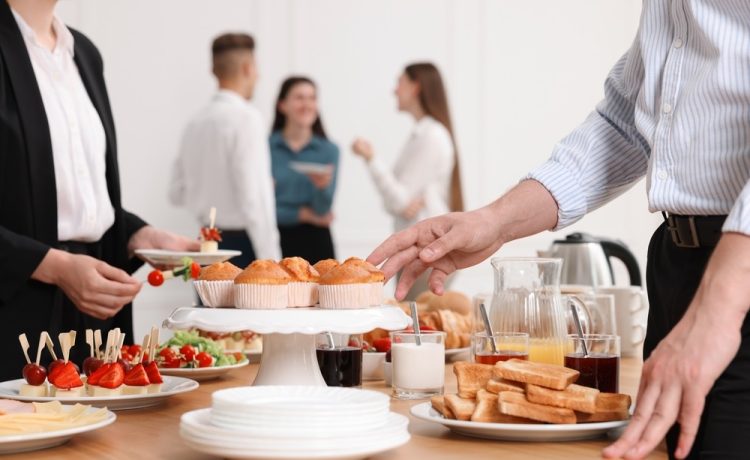
To fully visualize how an interactive catering station seamlessly integrates entertainment and dining, review the layout below detailing a premium live-cooking setup designed for maximum guest interaction and flow.
Frequently Asked Questions
How do interactive catering stations affect the overall flow and congestion of an event?
Interactive stations actually improve event flow when spaced out correctly throughout a venue. Unlike a traditional single-line buffet where guests move slowly in a massive queue, multiple interactive stations encourage people to move around the room, mingle, and visit different tables at their own pace. To prevent long wait times at any single live-cooking station, experienced caterers recommend planning for one station per fifty to seventy-five guests, ensuring that lines remain short and engaging.
Are interactive food stations safe for indoor venues with strict fire codes?
Yes, live stations can absolutely be adapted for strict indoor venues. Caterers use specific equipment based on venue limitations. If open flames or high-heat woks are prohibited by local fire codes, caterers utilize high-powered electric induction burners, portable convection ovens, or specialized stone decks that generate high heat without an open flame. Liquid nitrogen stations are also completely safe for indoor use, as nitrogen gas is non-flammable and dissipates quickly into the air.
How do live food stations handle severe cross-contamination risks for guests with celiac disease?
For guests with severe allergies or celiac disease, a high-quality caterer will set up a dedicated, isolated preparation area away from the main interaction zone. This ensures that utensils, surfaces, and pans are completely free from cross-contamination. While interactive stations are excellent for letting guests see what goes into their food, guests with life-threatening allergies should notify the host in advance so the kitchen can prepare their specific dish under fully controlled, sterile conditions.
Do interactive catering options cost significantly more than standard plated dinners?
Interactive catering can sometimes carry a higher price point, but not necessarily because of the ingredients. The primary cost driver is labor. Because these stations require trained chefs, mixologists, or action-station technicians to cook and assemble dishes individually for guests, you will need a larger staff presence than you would for a standard buffet or a pre-plated meal. However, many hosts find that this cost is offset by the fact that the catering doubles as the evening entertainment.
How can interactive catering be adapted for a formal corporate event without looking like a street festival?
To maintain a high level of corporate professionalism, focus on sophisticated presentation, premium materials, and uniform styling. Replace rustic chalkboards with custom-printed acrylic or digital signage that matches corporate branding. Chefs should wear matching, high-end uniforms, and the stations themselves should use luxury materials like marble, slate, or polished glass rather than rustic wooden crates. Elevating the ingredients to premium options like wagyu beef, truffles, and caviar also reinforces an upscale tone.
What is the best way to handle trash and used plates near interactive stations?
Because guests wander from station to station eating small plates, clearing clutter is critical to keeping the event elegant. Caterers handle this by placing discrete tray-return tables near each station and increasing the number of roaming service staff members. These servers navigate the crowd specifically to clear empty small plates, used skewers, and cocktail napkins directly from guests’ hands or high-top cocktail tables before clutter can accumulate.
How do you estimate food quantities when guests can customize their own portions at different stations?
Experienced caterers utilize a formula based on small-plate equivalents rather than full-sized meals. Instead of preparing one large entrée per person, the kitchen prepares three to four mini-portions per person across the various stations. By tracking historical data on which types of stations are most popular (such as seafood versus pasta), caterers can ensure there is an abundance of total food available without creating massive amounts of product waste.