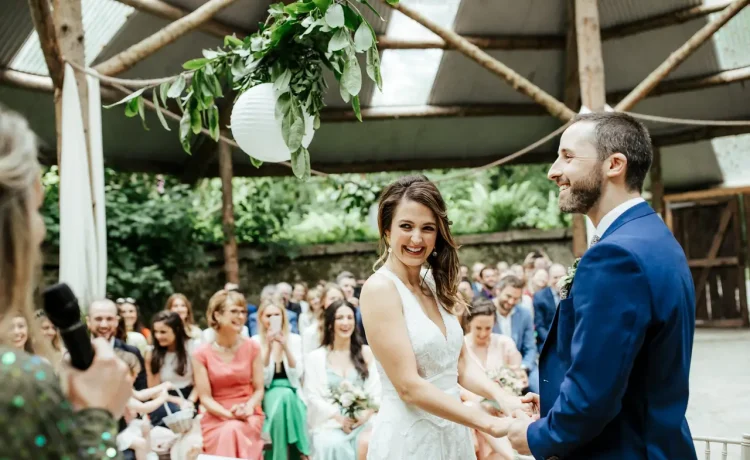
There is an inherent majesty to mountain landscapes that makes them an exceptional choice for couples looking to exchange their wedding vows. Towering peaks, sweeping alpine meadows, and endless horizons provide a naturally dramatic backdrop that no indoor chapel or modern banquet hall can truly replicate. Choosing a mountain venue allows couples to blend the profound emotional significance of their wedding day with the awe-inspiring beauty of the natural world.
Beyond the undeniable visual appeal, mountain venues offer an immersive experience for wedding guests. Escaping the hustle of urban life for the crisp air and tranquil stillness of a high-altitude destination immediately shifts the mood of an event. It transforms a standard wedding into a weekend-long retreat filled with exploration, stargazing, and scenic gatherings. From rustic alpine lodges to luxurious mountaintop terraces accessed by ski lifts, mountain destinations cater to a wide array of celebratory styles.
Architectural Typologies of Mountain Venues
When planning a mountain ceremony, couples can choose from several distinct venue styles, each offering a unique way to interact with the rugged topography.
High-Altitude Observation Decks and Terraces
For couples who want completely unobstructed views of the surrounding ranges, mountaintop terraces are the ultimate option. These venues are typically situated at the summits of major ski resorts or high-altitude peaks, requiring guests to ascend via enclosed gondolas or open-air chairlifts. The ceremony site itself is often a meticulously engineered stone or wooden deck built over the edge of the ridge, giving guests the sensation of floating above the clouds. This layout places the focus entirely on the horizon, creating a breathtaking, panoramic framing for the exchange of vows.
Historic Alpine Lodges and Chalets
Couples seeking a warmer, more traditional mountain aesthetic often gravitate toward historic timber and stone lodges. Characterized by massive exposed beams, oversized wood-burning fireplaces, and sweeping vaulted ceilings, these structures reflect classic architectural traditions. They provide an exceptionally cozy, sheltered environment for an indoor reception after an outdoor meadow ceremony. The large windows typical of these buildings ensure that even when guests are inside dining, the peaks remain a constant visual presence.
Valleys, Meadows, and Riverside Plateaus
Not every mountain wedding needs to take place at the absolute peak. Nestled in the shadows of prominent mountain ranges are lush alpine meadows, pristine valleys, and rocky riverside flats. These locations offer a different but equally compelling perspective, looking up at the imposing rock faces rather than down from them. Meadows are especially popular in late spring and summer when they erupt into fields of vibrant wildflowers, adding a soft, natural color palette to the rustic surroundings.
Designing and Production Styling for High Elevations
Hosting an event in a mountain environment requires an intentional approach to design and styling. The primary rule of mountain wedding production is to complement the existing landscape rather than compete with it.
Color Palettes Anchored in Nature
The choice of colors should harmonize with the specific textures and seasonal shifts of the mountain terrain.
-
Summer and Early Autumn: Incorporate rich, grounding tones like forest green, copper, rust, terracotta, and deep slate gray. These colors echo the bark of the evergreens, the iron in the rock formations, and the changing foliage.
-
Winter and Early Spring: Lean into crisp, clean tones like icy blue, soft silver, stark white, and deep charcoal. These shades enhance the bright, reflective properties of snow-covered peaks and frost-tipped pines.
Floral Design with an Organic Footprint
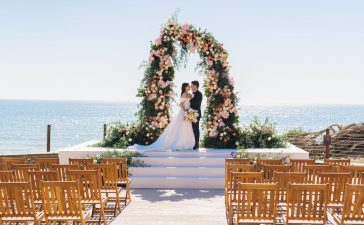
Floral installations at a mountain ceremony should look as though they naturally grew out of the earth. Avoid overly manicured, perfectly spherical arrangements. Instead, opt for sprawling, asymmetrical structures that mimic the wild growth of alpine flora. Incorporate local foliage such as pampas grass, dried ferns, blue spruce branches, and cascading eucalyptus vines. If using a traditional arch, consider open-frame designs that do not block the panoramic view behind the altar, allowing the peaks to serve as the central visual element.
Lighting for Transitioning Environments
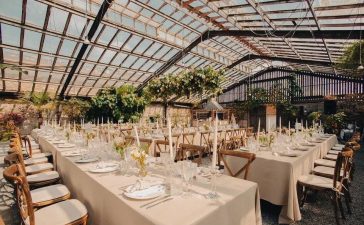
Mountain weather changes rapidly, and twilight at high altitudes can settle in quickly. Ambient lighting must be engineered to handle the transition from bright afternoon sun to deep mountain darkness. String low-voltage café lights across outdoor dining areas to create a warm, sheltered canopy. Supplement the tablescapes with an abundance of glass-enclosed pillar candles to prevent the mountain breeze from blowing out the flames.
High-Quality Visual Inspiration
Review the mountaintop stone terrace layout below to visualize how clean architectural lines, warm natural materials, and an unobstructed mountain horizon combine to create a dramatic, deeply romantic ceremony environment.
Frequently Asked Questions
How does altitude sickness impact wedding guests and how can hosts mitigate it?
Altitude sickness, or acute mountain sickness, can affect anyone ascending above eight thousand feet, causing symptoms like headaches, dizziness, and fatigue. To help your guests acclimate, recommend that they arrive at the mountain destination a day or two prior to the main wedding events. As a host, construct dedicated hydration stations stocked with electrolyte-infused water, coconut water, and oxygen canisters. It is also wise to serve lighter food menus and limit heavy alcohol consumption during the initial welcome party, as altitude intensifies the physical effects of alcohol.
What unique audio challenges do mountain settings present during a ceremony?
The vast openness and unpredictable winds of a mountain peak can easily swallow sound, making it difficult for guests to hear the vows or the officiant. To solve this, your audio technician must utilize professional-grade, high-gain wireless lapel or lavalier microphones for both the officiant and the couple. Additionally, require wind muffs, often called deadcats, on all microphones to completely filter out the whistling sound of high-altitude gusts. Specialized directional speakers should be positioned strategically along the seating rows rather than just at the front.
How should couples plan for the rapid temperature drops common in mountain environments?
Mountain destinations are notorious for extreme diurnal temperature shifts, where a warm, sunny seventy-five degree afternoon can plummet to a chilly forty degrees the moment the sun dips behind the peaks. Hosts should explicitly note this on the wedding website, advising guests to bring warm layers or formal shawls. Practically, you can set up a basket of rolled fleece blankets near the ceremony entrance and arrange for commercial-grade propane patio heaters or fire pits to be ignited around the outdoor cocktail space as twilight approaches.
What logistical hurdles do vendors face when setting up at a gondola-access summit?
When a venue is located at the top of a ski mountain, every single piece of equipment, from heavy floral arches and sound systems to tables, chairs, and catering supplies, must be transported up the mountain via the gondola or specialized all-terrain vehicles. This requires strict coordination. Vendors must pack their gear into compact, durable flight cases that fit inside standard gondola cabins. The load-in timeline must be expanded significantly, often beginning at dawn, to accommodate the slow, rotation-based transit of materials.
Is a backup indoor plan absolutely necessary for an outdoor mountain ceremony?
A comprehensive, fully realized weather backup plan is non-negotiable for a mountain wedding. High-altitude environments can generate unexpected thunderstorms, dense fog that ruins visibility, heavy winds, or even unseasonal flurries in the middle of summer. Your backup indoor space or enclosed pavilion should be reserved concurrently with your outdoor site. Ensure that your decor plan is flexible enough that your floral installations can be struck and re-assembled indoors within a two-hour window if the radar indicates incoming weather.
How do mountain terrains impact dress codes and footwear recommendations for guests?
Uneven stone terraces, gravel pathways, and grassy alpine meadows make traditional high heels highly impractical and dangerous for guests. Couples should gently encourage a dress code like mountain chic or alpine formal on their invitations, specifically advising guests to wear block heels, wedges, or dressy flat footwear. Brides should also consider the wind and terrain when selecting their own attire, opting for more stable fabric weights and manageable gown trains that will not snag on mountain brush.
Can individuals with mobility limitations safely attend a mountaintop wedding?
Yes, most modern mountain resorts and venues are fully equipped to accommodate guests with mobility limitations, but it requires advance planning. Enclosed gondolas can typically be slowed down or completely paused to allow wheelchairs and walkers to board safely. Once at the summit, ensure there are paved or hard-packed wooden boardwalks connecting the transport station to the ceremony deck. Always communicate directly with the venue coordinator to arrange for dedicated staff members to assist any elderly or disabled guests throughout the transitions.